PBI 2027 Classes
PAPER AND BOOK INTENSIVE 2027
-
![]()
Brass Work: Design and Perhaps a Clasp!?
GABBY COOKSEY | Session One
-
![]()
Historical Blockprinted Papers: Techniques, Patterns, and Possibilities
MITCHEL GUNDRUM & MARTHA KEARSLEY | Session One
-
![]()
Papecase: Covered & Uncovered
ANNE HILLAM | Session One
-
![]()
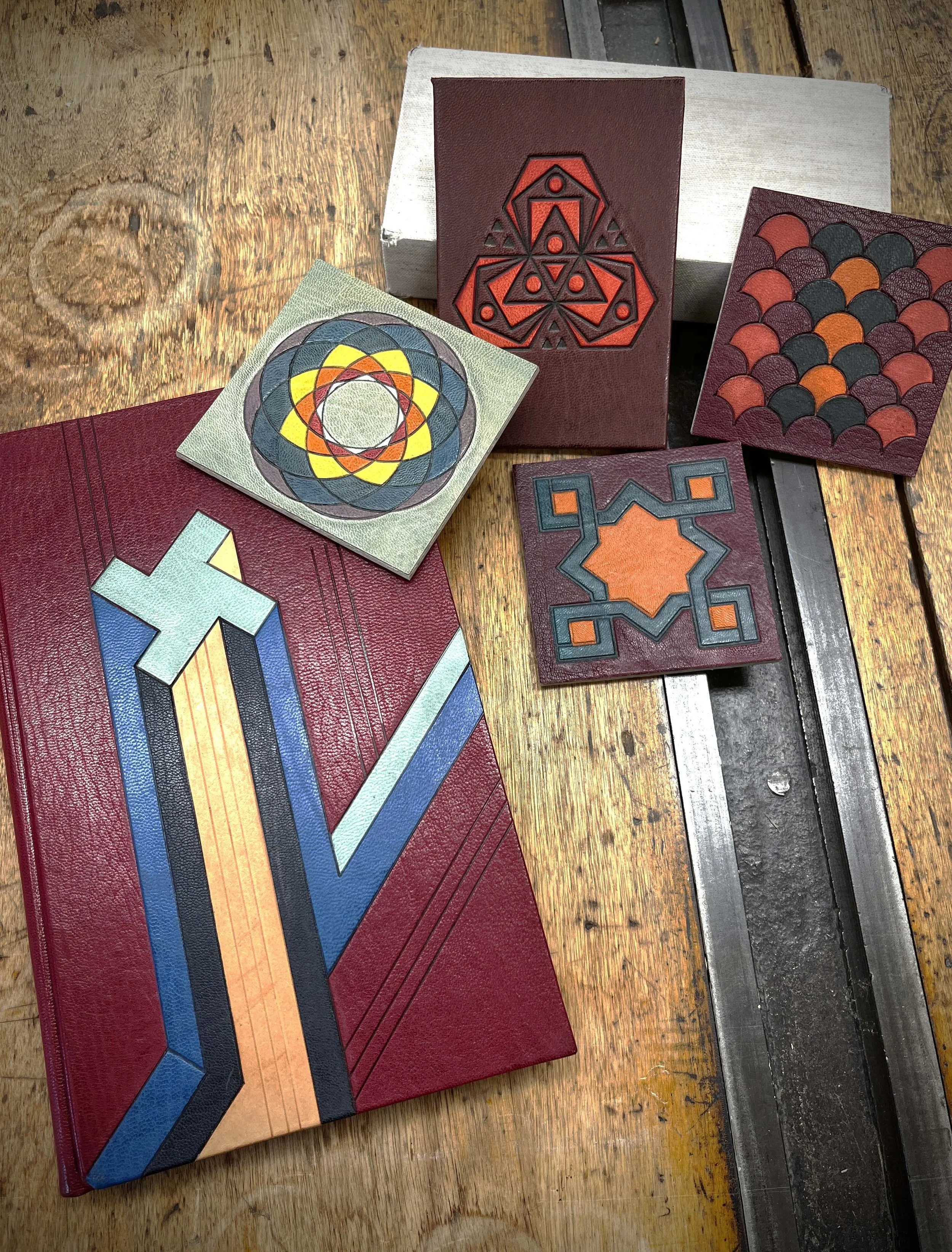
Adding Color to Bindings with Leather Onlays
JESSE HUNT | Session One
-
![]()
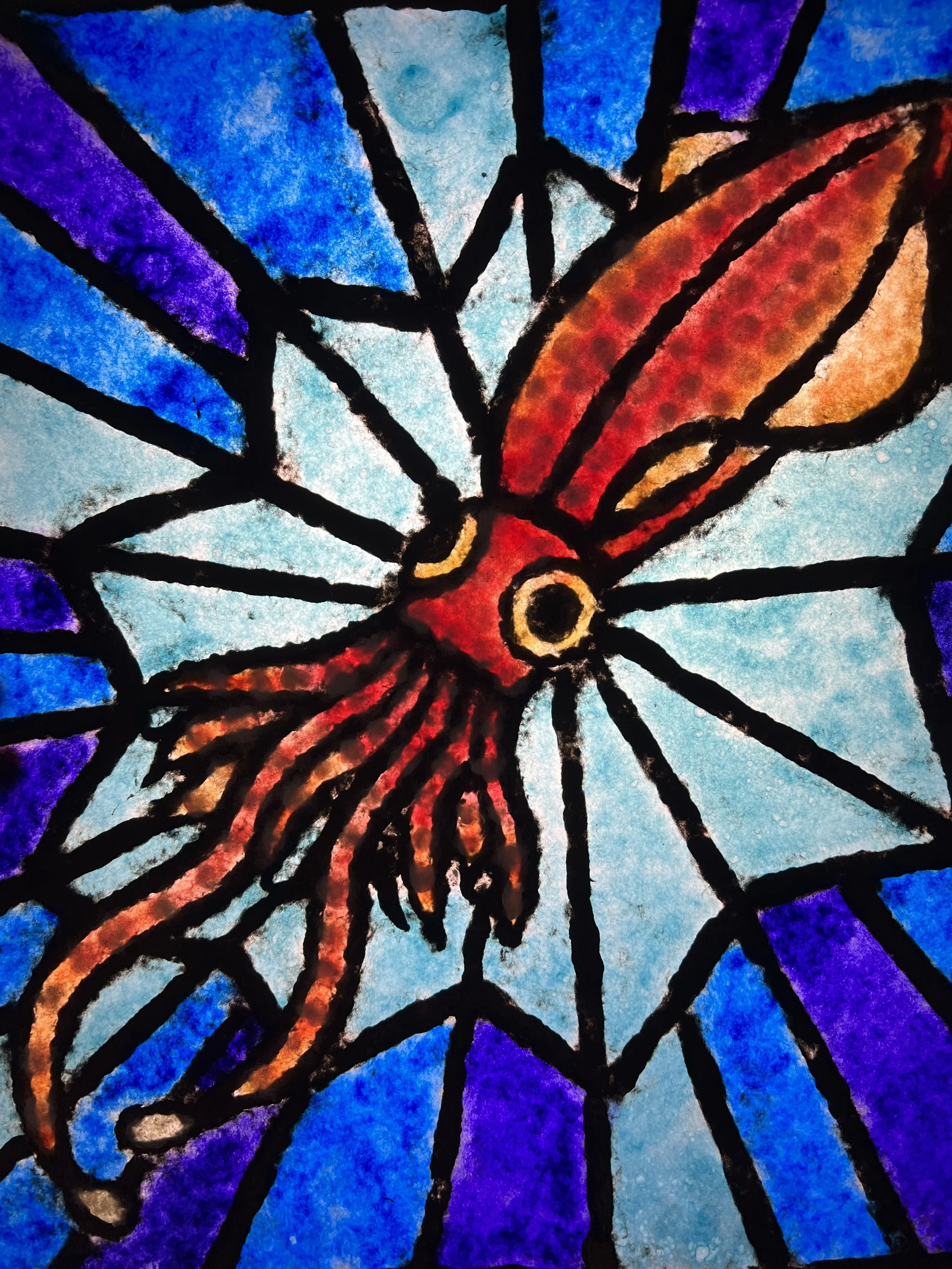
Venerated Paper: Stained-Glass Mimicry through Contemporary Hand Papermaking Techniques
AURELIUS SUTTER | Session One
-
![]()
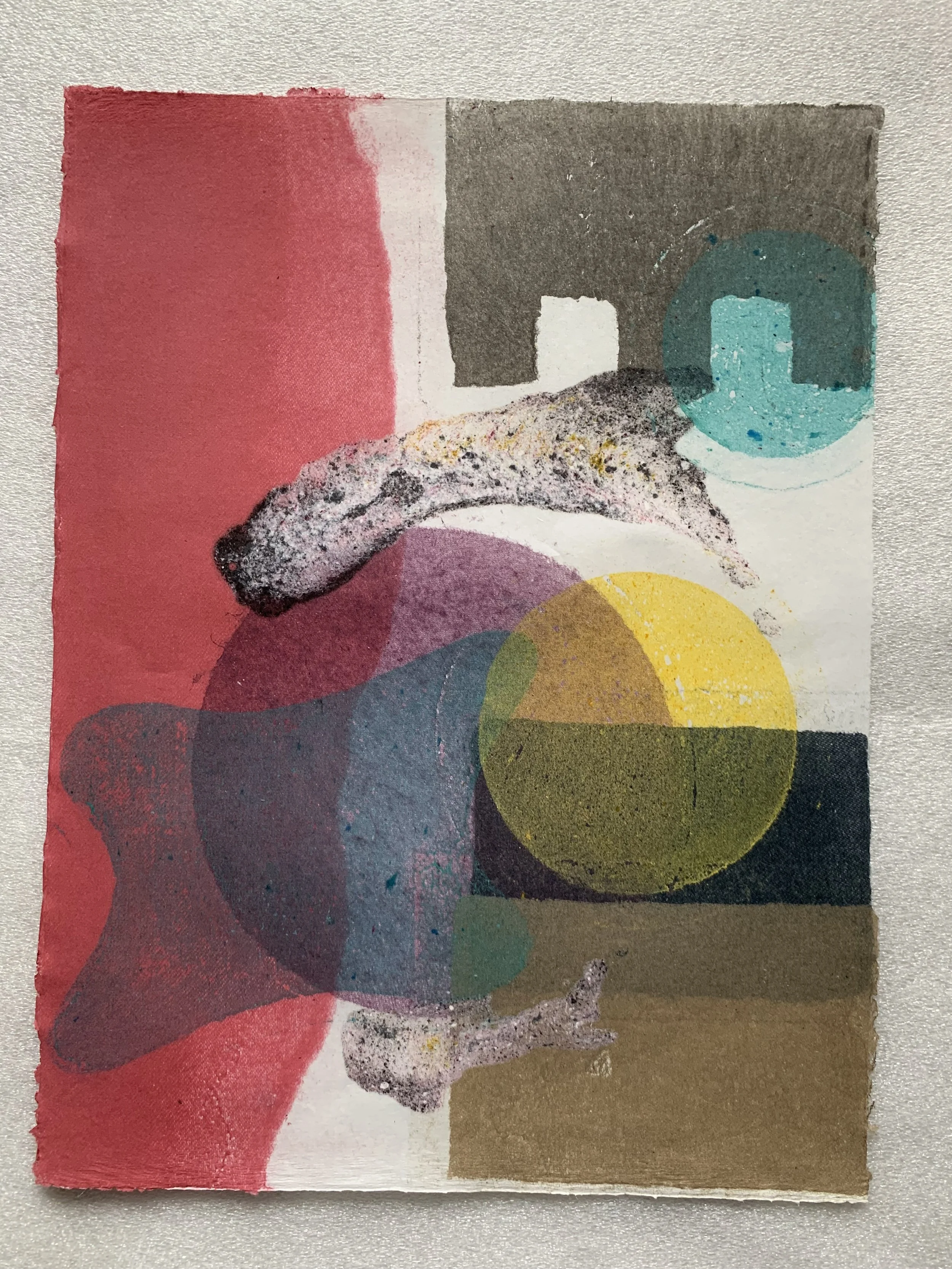
Unveiling the Veil
TOM BALBO | Session Two
-
![]()
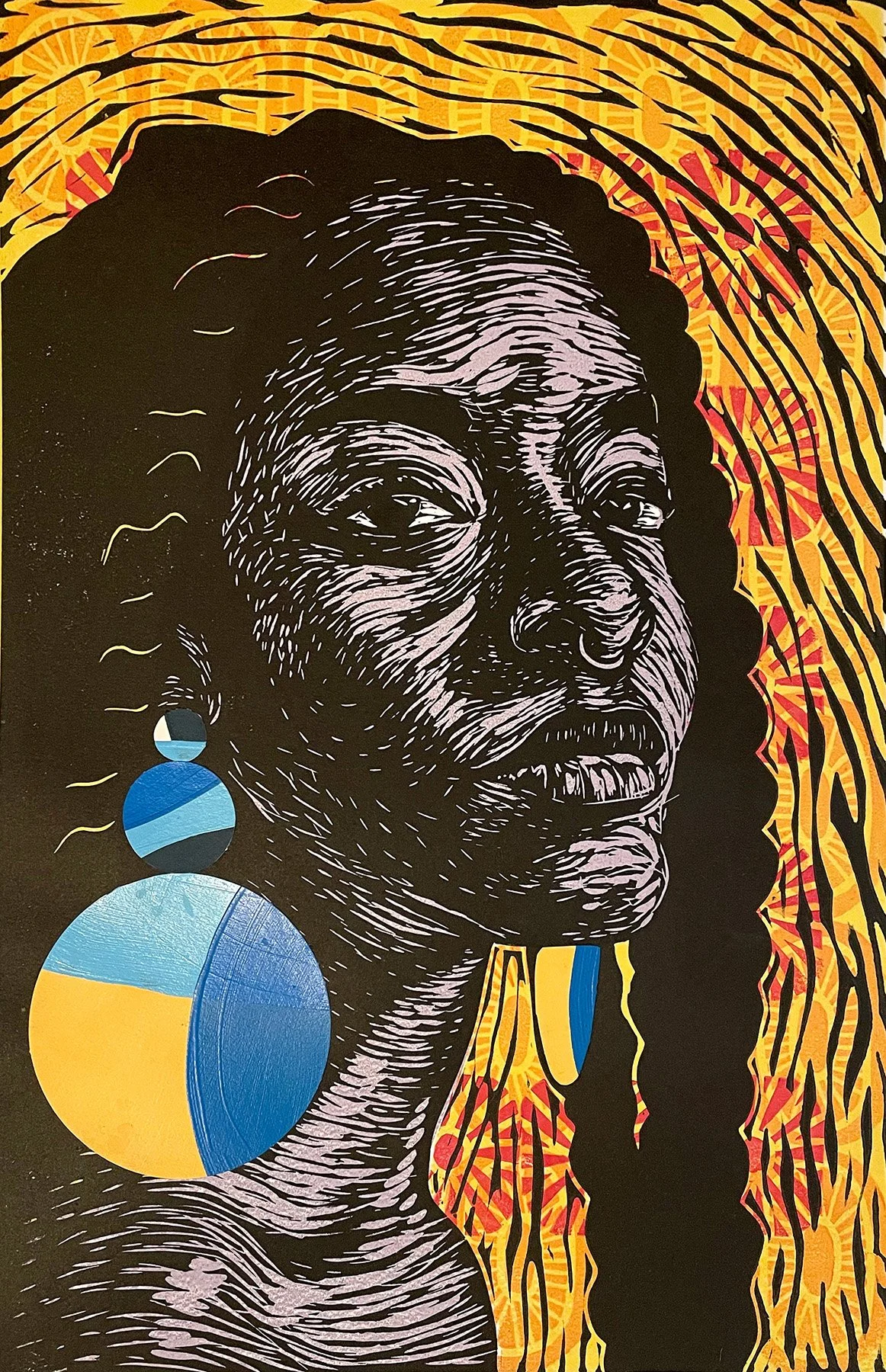
Rhythm and Mark Making
JAMAAL BARBER | Session Two
-
![]()
Danish Paper Bindings – Millimeter & Rubow
ERIN FLETCHER | Session Two
-
![]()
Armenian Bookbinding
TAMARA OHANYAN | Session Two
-
![]()
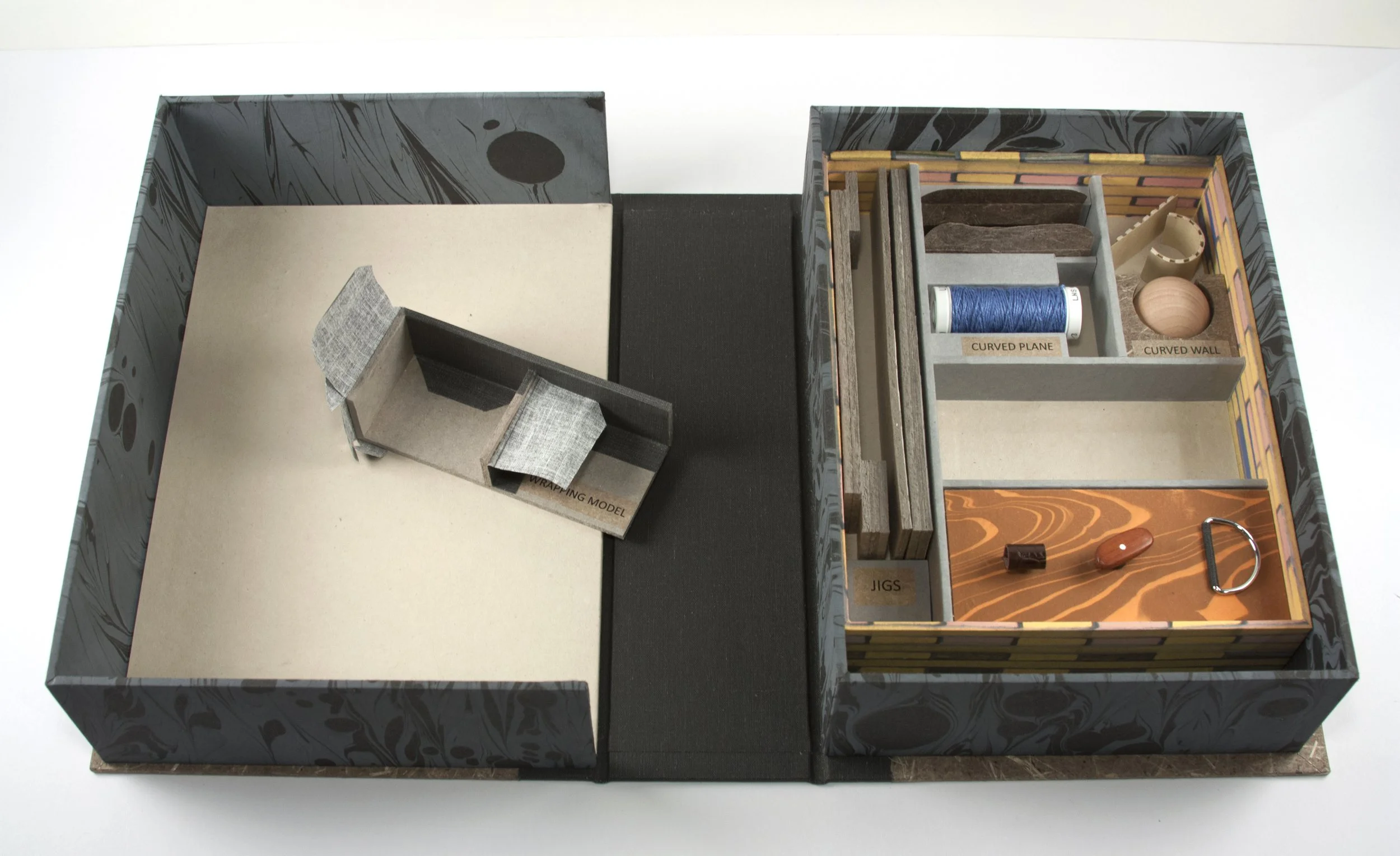
The Book Arts Toolbox
MARY UTHUPPURU | Session Two
1
SESSION 1
-
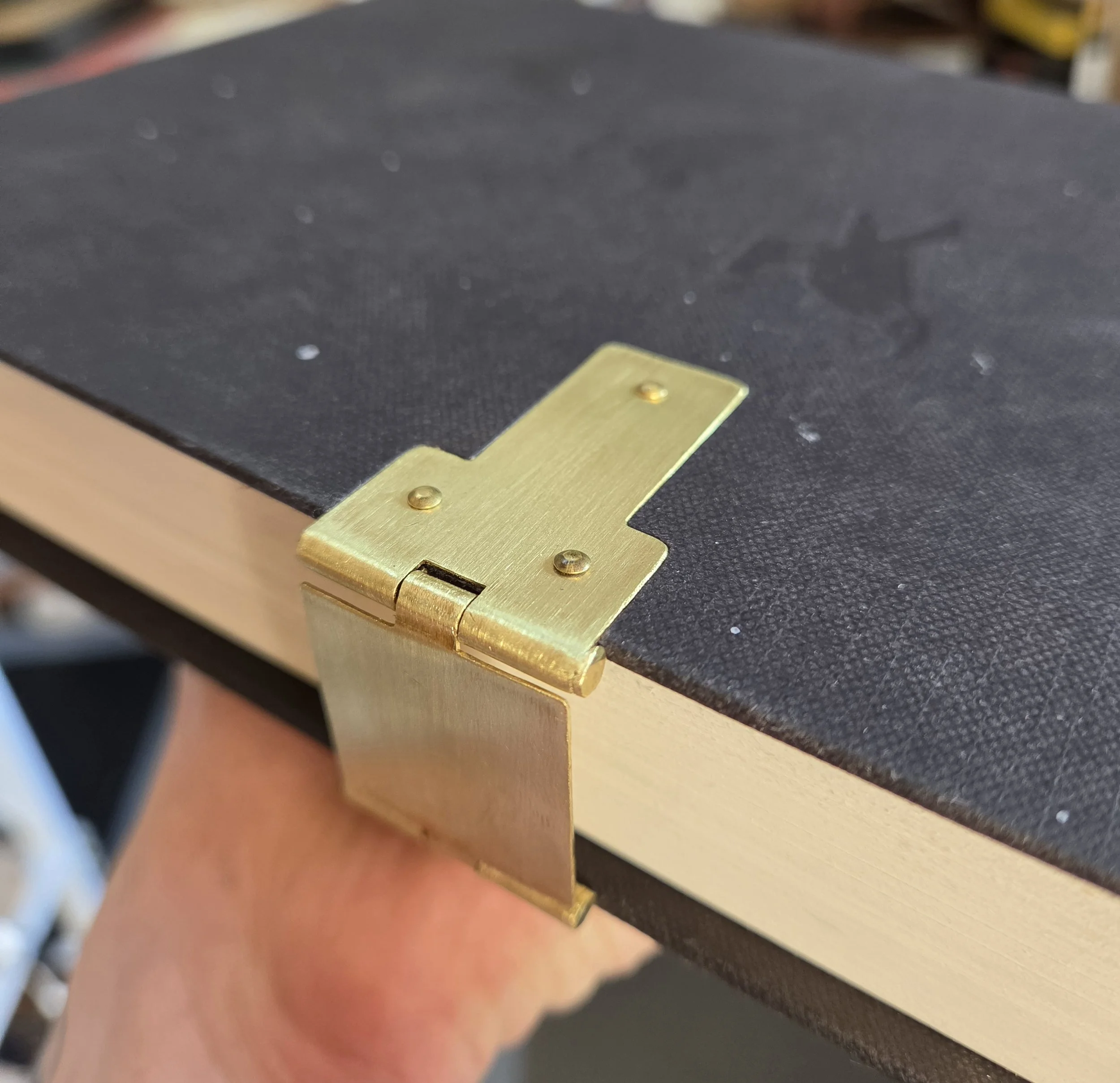
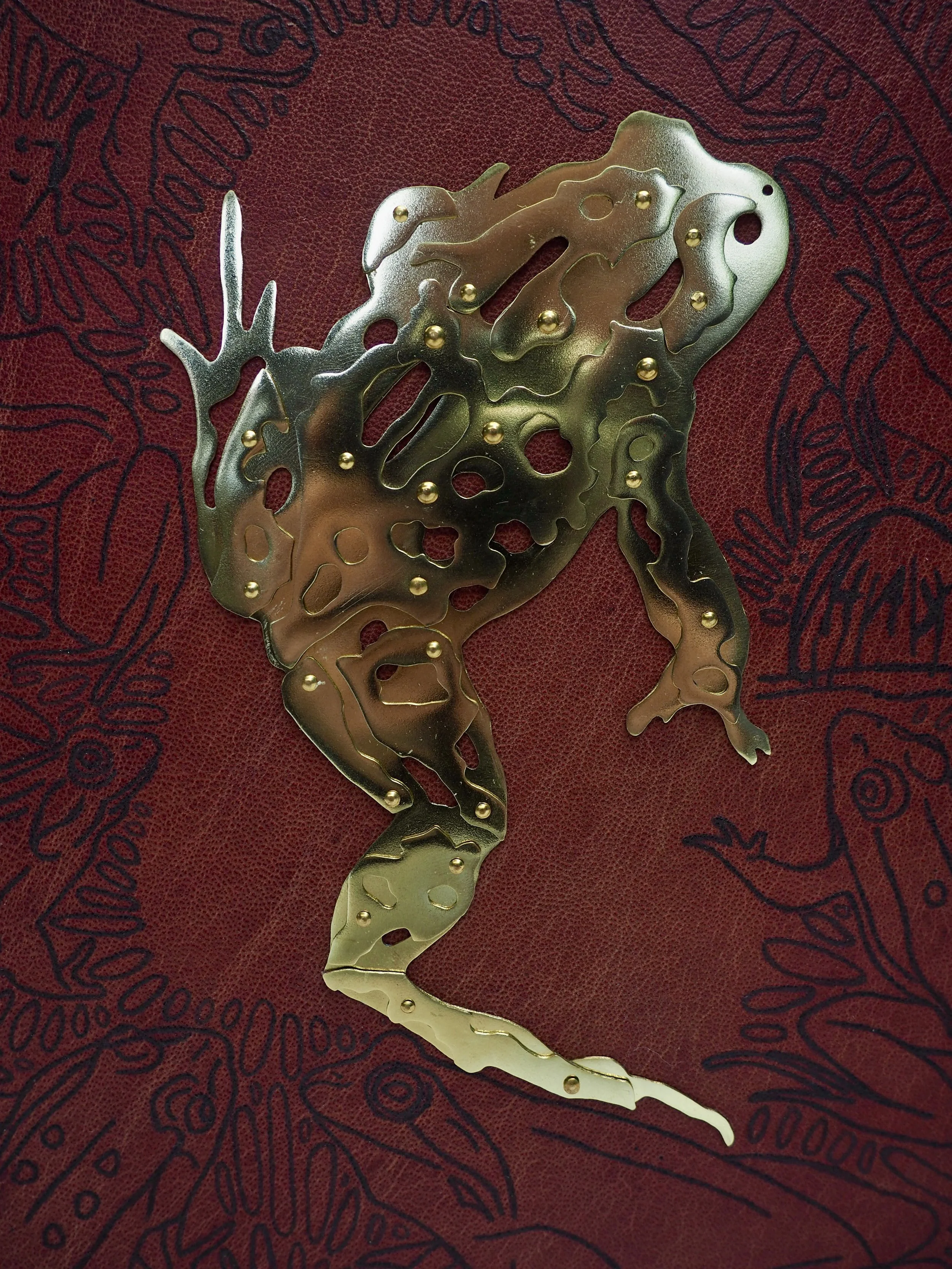
Learn how to work with brass whether you want to make a drawing come to life with this soft metal or want to learn how to make a basic clasp using a catch plate and a hasp. We will go over the basics of cutting with a jewelers saw—straight lines, curves, holes, right angles, etc. And how to attach the brass to your book using escutcheon pins on an anvil. And learn the variety of ways to file, sand, and polish your brass to your heart’s desire. And discuss how to lock in your shine with lacquer (drying time permitted). And what tools to buy and how to make your own tools for clasp work. Finally, we will attach the design and/or clasp to a used hardcover book*.
Cutting brass requires patience and time. This might be your first time ever working with brass and you might be surprised by how many blades you break! It’s all part of the process, man. Once you’ve learned the basics, and which finger to put a band aid on to prevent future cuts, the sky’s the limit! From traditional to modern brass usage, my goal is to make brass work comfortable so you can fulfill your own project needs in your own shop.
Note: You’re welcome to bring your own hardcover book to mount your brass designs/clasp to, the book should be no thicker than 1.5 inches. We will be working on binder’s board and not wooden boards. -
Gabby Cooksey is a bookbinder and book artist from Tacoma, Washington, also known as Bound by Cooksey. She has been binding for fifteen years, has had the honor of presenting at the Guild of Bookworkers annual conference, and speaking at the Library of Congress on bookbinding. Her work can be found in many private collections and public institutions including the Boston Athenaeum, Smithsonian Museum, and Cynthia Sears Artists’ Book Collection.
2
-
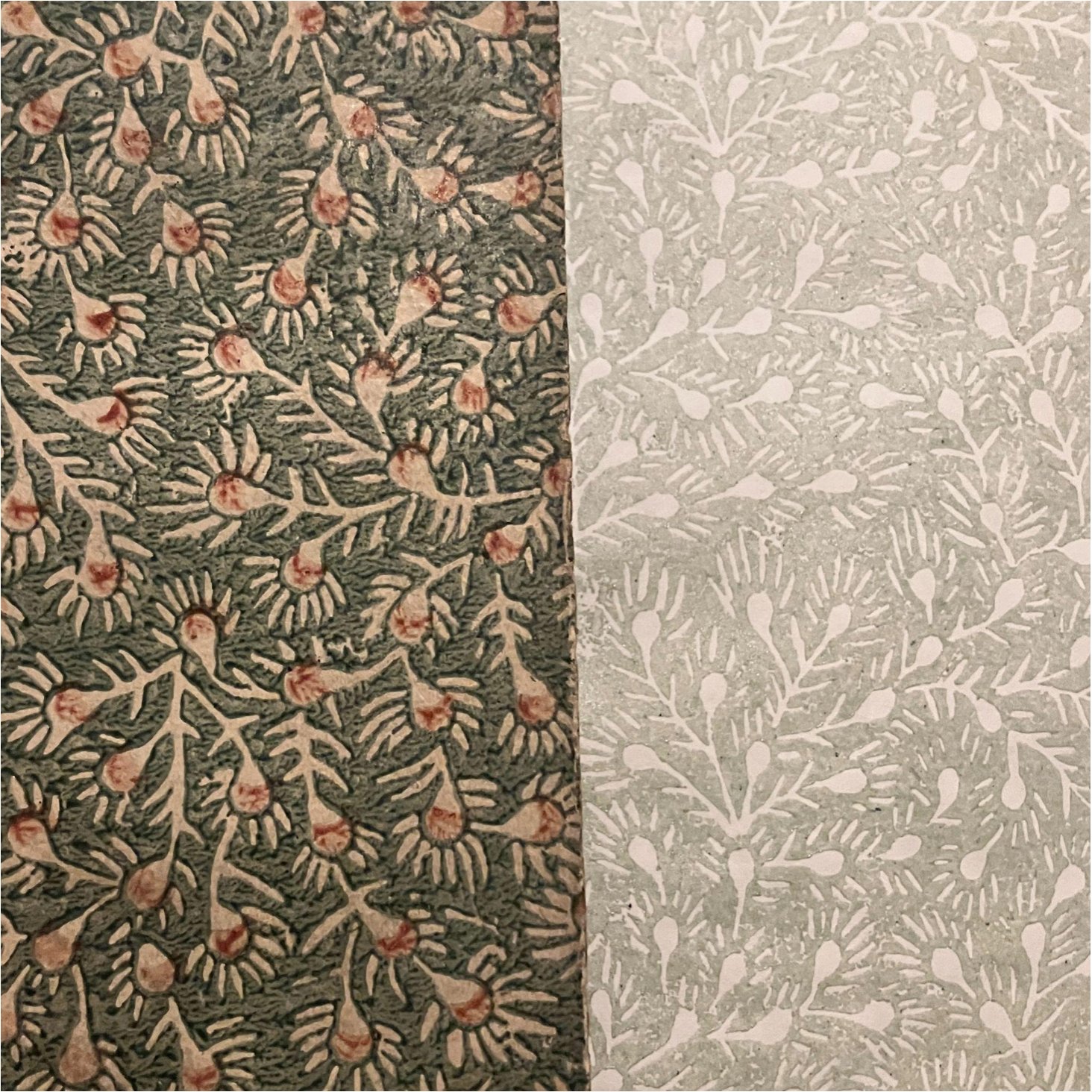
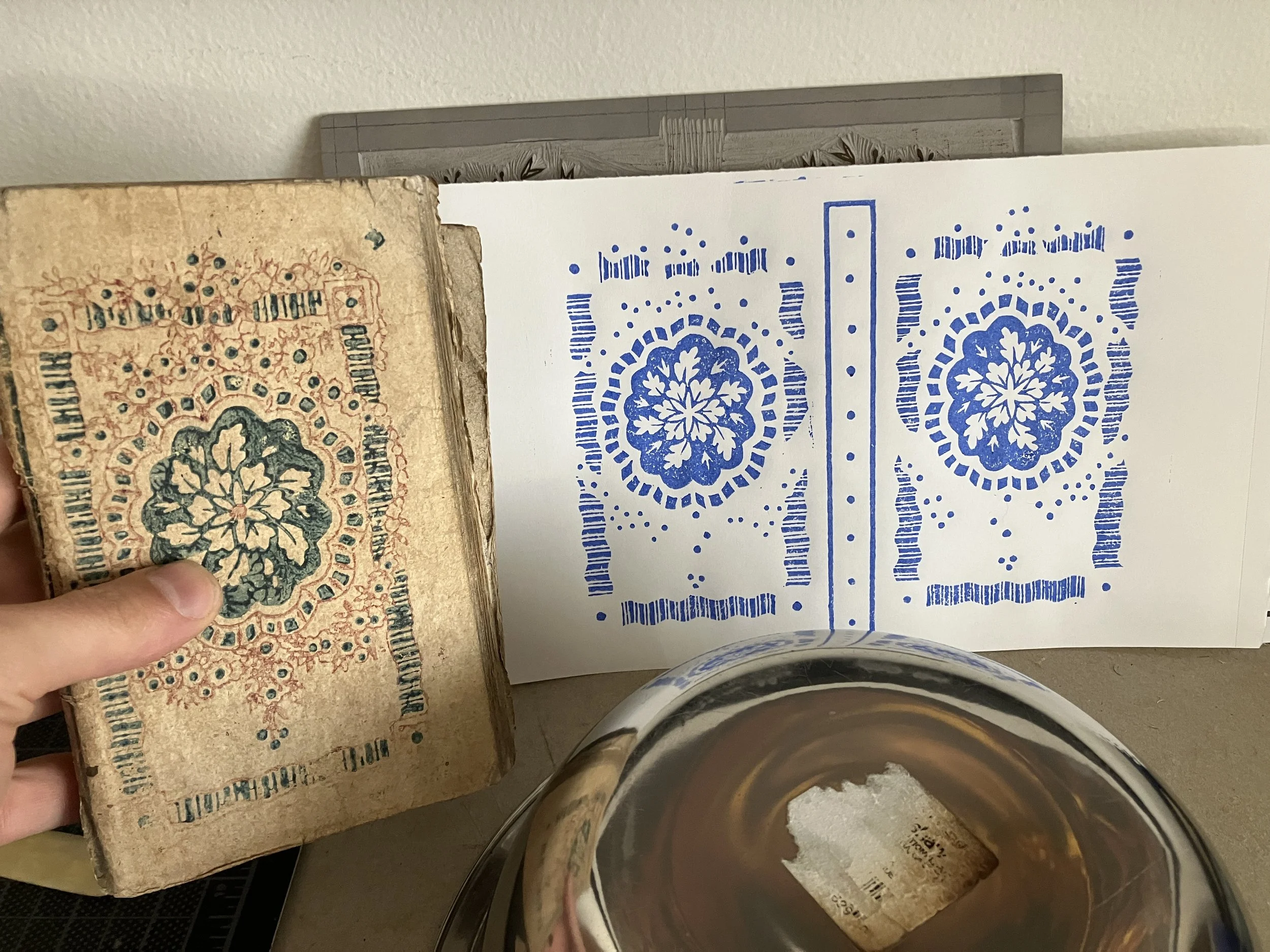
The history of decorated papers (papers which are colored or patterned after sheets have left the mill as a raw material) has roots in the very earliest use of paper as a bookbinding and manuscript material. Many patterns which continue to be popular today on wallpapers, curtains, and clothing can be traced back to these early modern workshops and mediums. Just as book structures can vary greatly across eras, cultures, and geographies, the development of decorated book papers involves a plethora of nuanced styles and applications, all subject to the infinite creativity of individual artists and craftspeople. This workshop will highlight one facet of that world: relief printing from carved blocks.
This class will be a primer on blockprinting with linoleum blocks—focusing on technique, design, and experimentation—as guided by historical patterns and motifs. Participants will learn about various styles of decorated paper created and used in Europe c. 1600–1850, study historical papers from the instructors’ extensive library and collections, and then design, carve, and print their own papers using modern printmaking ink and historically inspired paste colors. Instruction will include tool maintenance, material selection, and the fundamentals of repeat pattern design. Students will have the opportunity to make a selection of their own papers for bookbinding, scrapbooking, giftwrapping, and other crafts. Students are encouraged to bring in their own papers, textiles, images, or objects for inspiration and interpretation.
-
Mitchel Gundrum is a bookbinder, conservator, and collector/researcher of decorated book papers. After starting his book arts journey at the San Francisco Center for the Book, he studied bookbinding at North Bennet Street School and book conservation at West Dean College. He has worked at the US National Archives, Boston Athenaeum, American Antiquarian Society, and UCLA, and is currently a book conservator at The Huntington in San Marino, California.
Mitchel teaches workshops on book arts and repair, and studies historical bookbinding structures and decorated papers through provenance research and modelmaking. He is currently working with an international team of scholars to publish a multilingual translation of the earliest known European bookbinding manual (Antwerp, 1612), and he maintains an online catalog of his own decorated paper collection at www.schwebenbuntpapier.com.
Martha Kearsley is a bookbinder and letterpress printer from Portland, Maine, where she has owned and operated Strong Arm Bindery since 1999. Her studio practice focuses on the design and production of stationery, as well as box making, commissioned book and paper repair, and edition work. She is currently an instructor at Maine College of Art + Design, and at North Bennet Street School. She lives on Peaks Island with two cats and some truly great neighbors.
@strongarmbindery
3
-
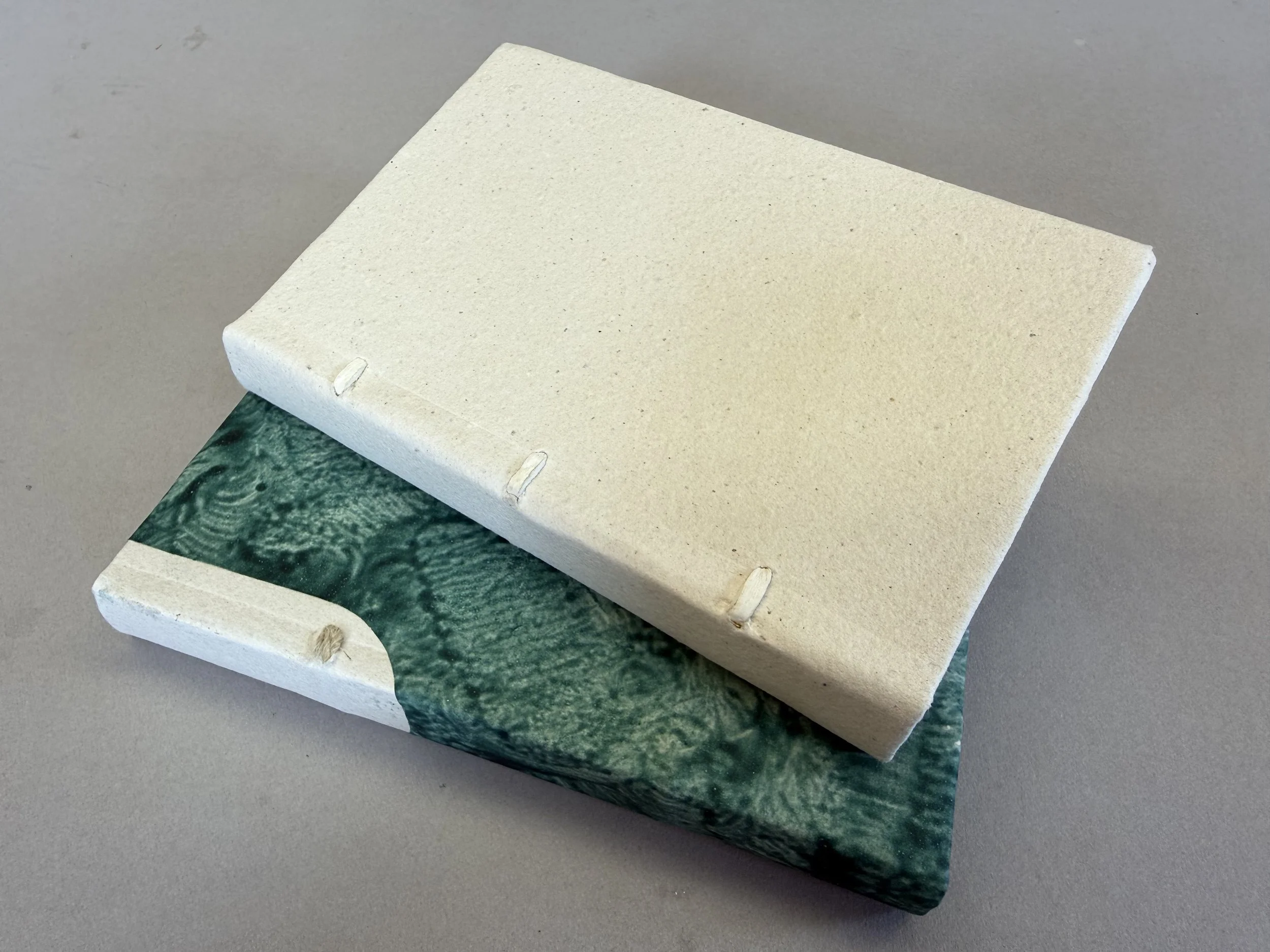
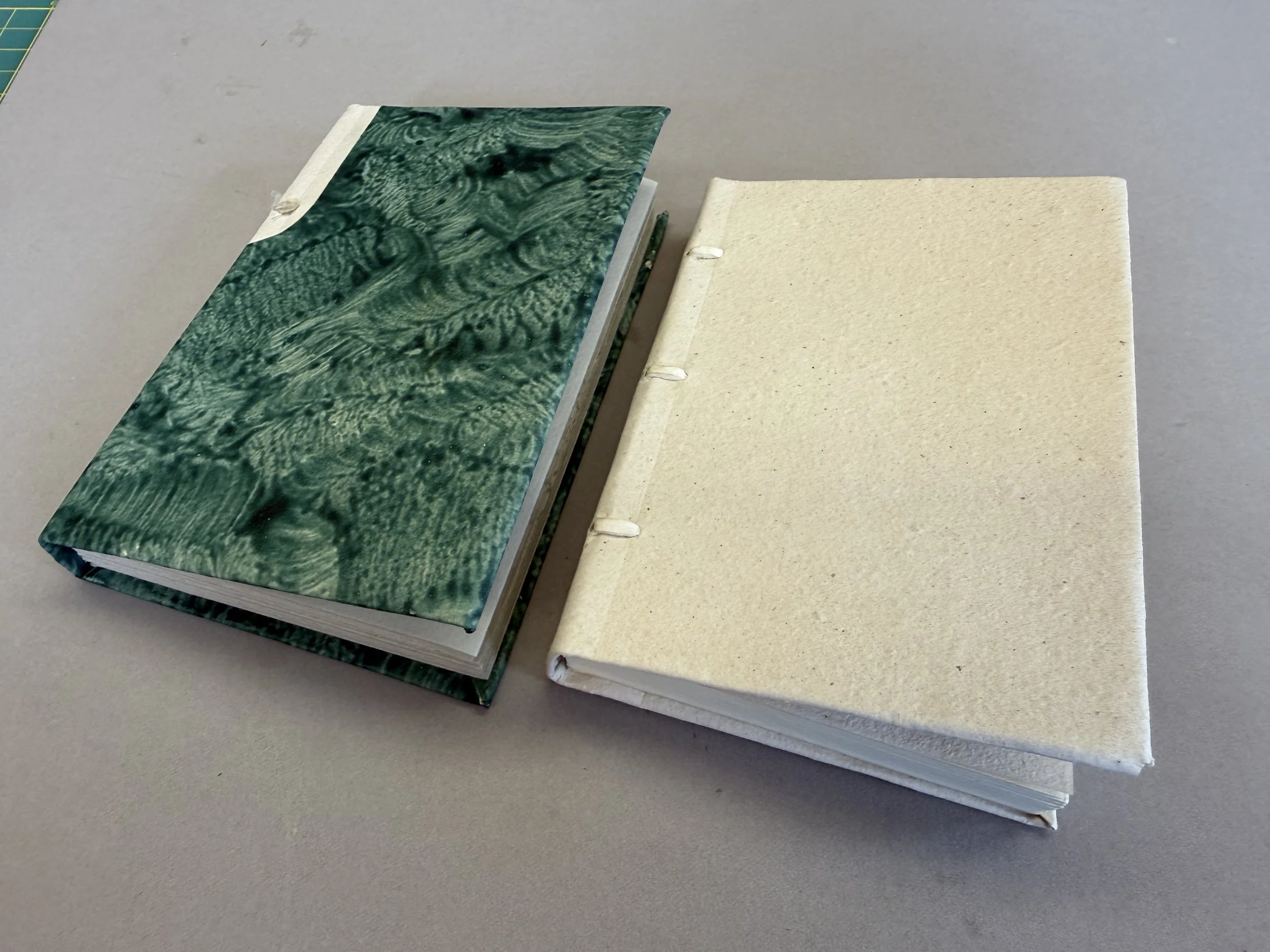
In this course, students will make two papercase bindings, one being a straightforward laced-case construction using alum-taw supports and cover weight paper, and another using vegetable fiber supports with a secondary covering in pastepaper. We will make our own pastepapers in class using historical patterns and techniques. Both structures are based on variants from two Italian bindings from circa 1660 and 1762. These bindings use little to no adhesive and can be easily reversed. Historical examples will be available for analysis and inspiration!
Students will make two papercase bindings in this workshop. The first will be a typical laced-case construction using alum-taw sewing supports and cover weight paper for the case. The second will use vegetable fiber sewing supports with a secondary paste paper covering. We will make our own paste papers in class using historical patterns and techniques. Both structures are based on variants from two Italian bindings from circa 1660 and 1762. These bindings use little to no adhesive and can be easily reversed. Historical examples will be available for analysis and inspiration as we create our own books.
-
Anne Hillam is a book conservator in private practice, providing conservation services to institutions and individuals in New York City and Western Massachusetts. She was Head of Conservation at the New York Academy of Medicine’s Gladys Brooks Book & Paper Conservation Laboratory. Anne is the Guest Lecturer for Book Conservation at the Garman Art Conservation Department at SUNY Buffalo State. She has a strong interest in historic book structures, particularly parchment bindings, and teaches these both nationally and internationally. Anne is a Professional Associate in the American Institute for Conservation of Historic Works.
4
-
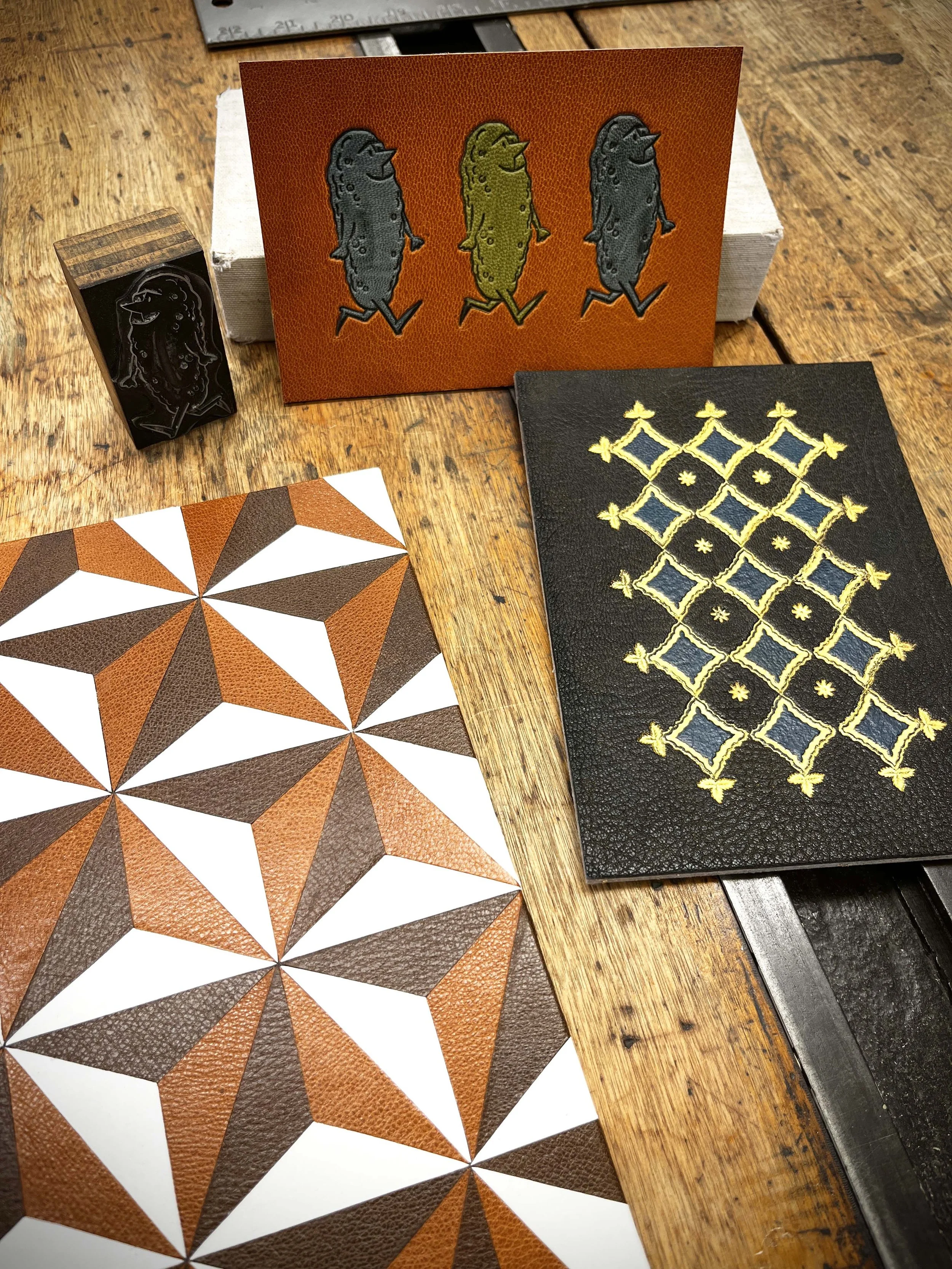
One of the most effective ways to increase a binding’s aesthetic appeal is to add color. The earliest attempts to add color to books were made with paint or dyed paper since it was easier, cheaper, and faster to produce a range of colors in those mediums. Using dyed leather, however, offers a virtually identical texture, durability, and workability to that of the covered book, giving the completed binding a cohesive look and feel.
In this workshop, participants will be using leather onlays to complete a set design on individual plaquettes. Our goal will be to combine visually dynamic colors in such a way that the finished onlay appears materially unified, has clean joints/edges and a flush profile. Workshop participants will have a chance to familiarize themselves with the Schärffix leather paring machine and learn how to achieve the appropriate thickness for their onlay leather. We will also cover methods for transferring patterns, using adhesives, attaching the onlays, and pressing the work.
Hand tooling is its own unique skill and although we will discuss it briefly in this class, it requires dedicated instruction and time to achieve satisfactory results. For the purposes of this workshop, we will be employing a die plate that will ensure a consistent design for everyone in the class to use. I will also discuss using letterpress photopolymer to make your own inexpensive, limited use plates for stamping designs into leather.
-
Jesse Hunt is the Book Conservator at Bridwell Library on the campus of Southern Methodist Univ. in Dallas, TX and organizes the Helen Warren DeGolyer Competition for American Bookbinding, a national competition for fine binding, held every three years. He is a Professional Associate with The American Institute for Conservation and a long-time member of the Guild of Bookworkers. Jesse has a Masters in Library Science from the University of North Texas and a Bachelor’s in Fine Arts, Printmaking from the University of Missouri in St.Louis.
5
-
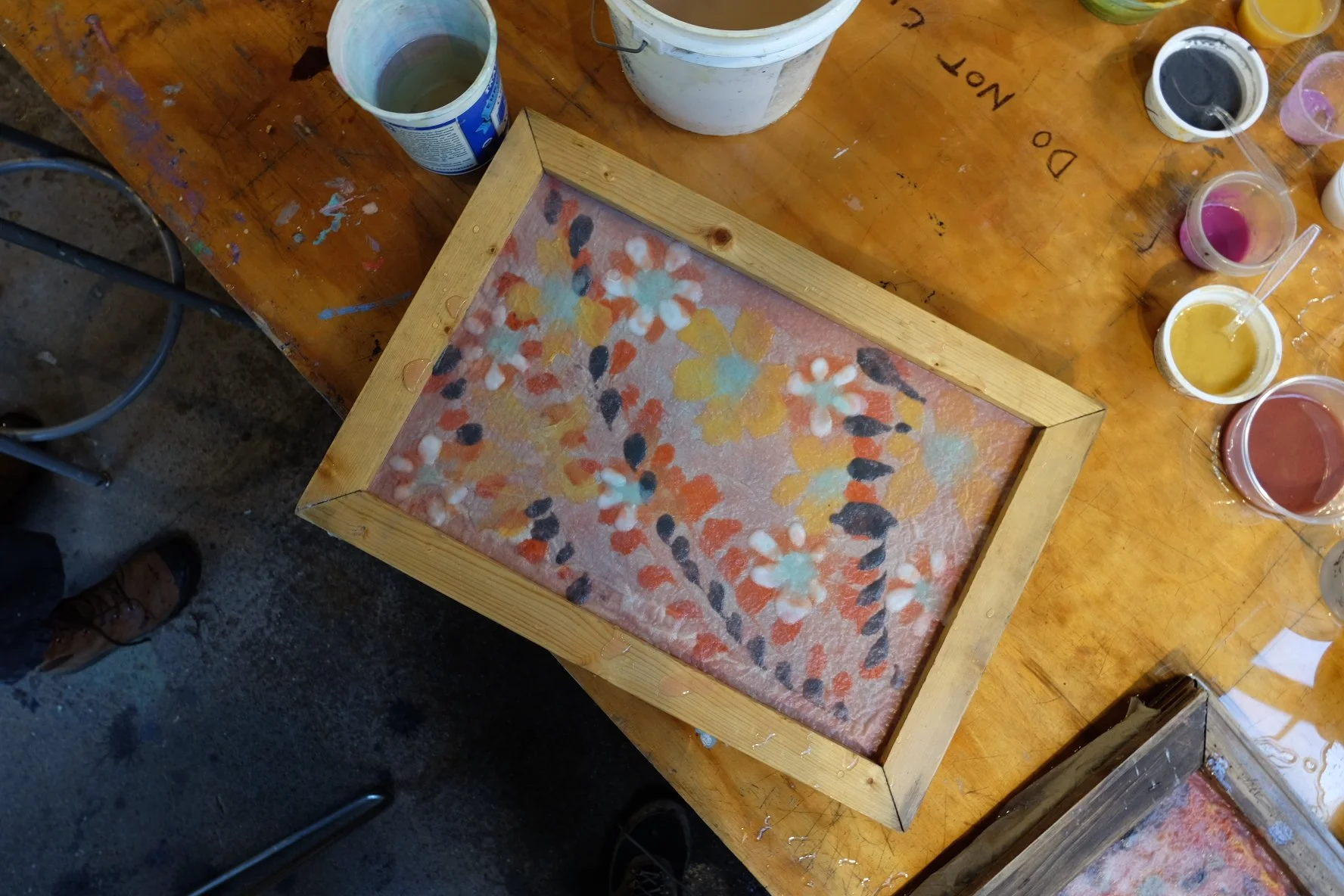
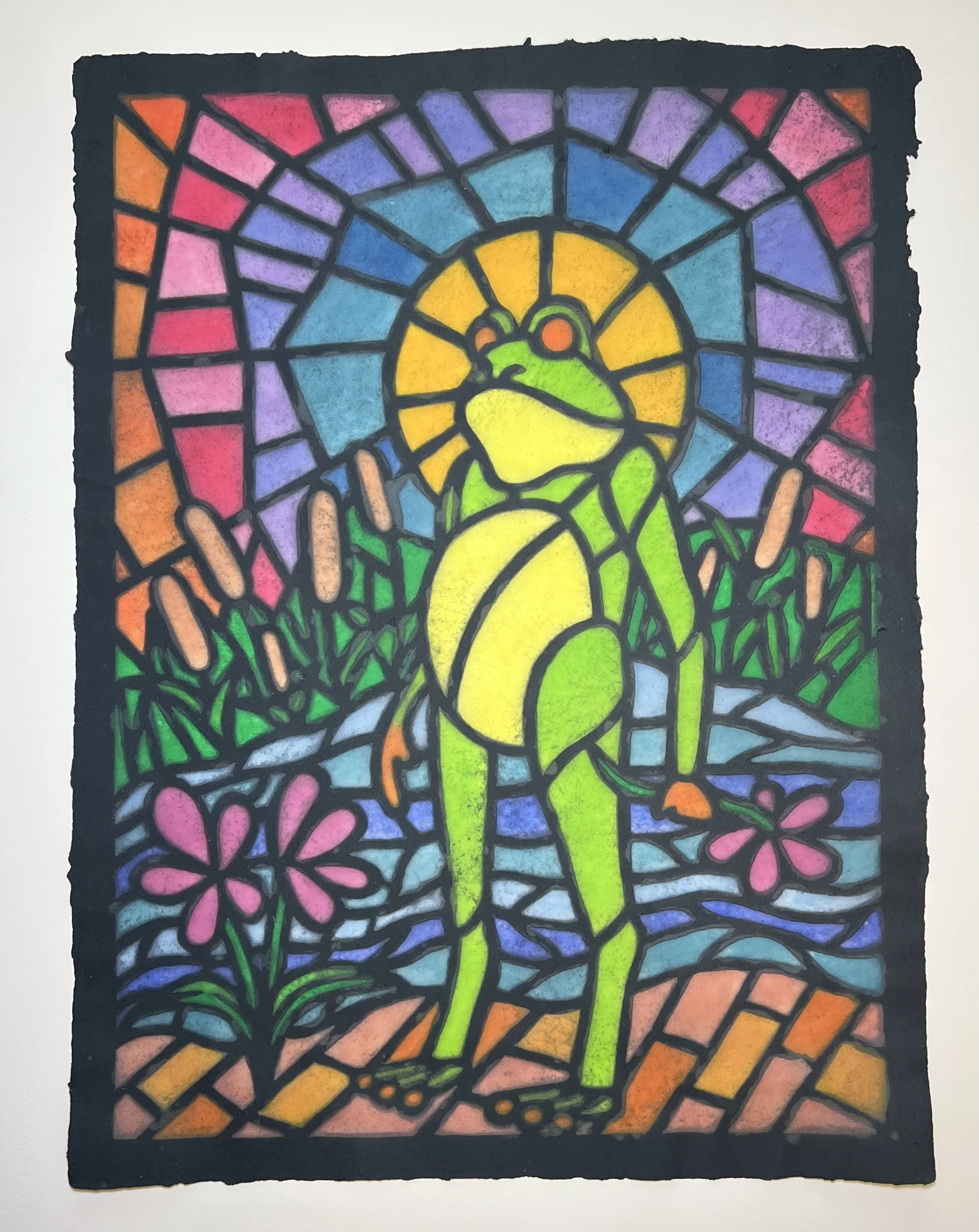
Papermaking and stained glass are both alchemical practices. They transform fibers and sand into materials capable of portraying image, emphasizing sunlight, and fostering belief. Both evolved from creating utilitarian objects in celebration of human expression. Employing pulp painting and innovations on that process, students will design and construct paper pieces that mimic the particular luminescent qualities found in stained glass works. As workshop participants create their designs, we will discuss the historical role stained glass holds in religious settings and its ties to financial influences. What does it mean to use this form to sanctify? To subvert?
Opaque black pulp will replace the lead used between the colored panes in stained glass work, and pigmented translucent pulp will fill the panes. Recipe sheets for two types of blender-beaten pulp will be provided alongside an emphasis on DIY from-the-kitchen methods of papermaking. With processes learned during this workshop, participants will be able to construct their own editions of stained glass inspired imagery anywhere they can make a post and plug in a blender.
-
Aurelius Sutter is an interdisciplinary artist who favors papermaking as a foundational medium to his practice. His experimental work is backed by a focus on innovation and contemporary developments in hand papermaking. Aurelius founded the Swash Zone—a collaborative paper making outreach initiative focused on hosting paper workshops and encounters for local communities. When not at work as an assistant professor for the MFA Book Arts Program at The University of Alabama, Aurelius can be found scouring the woods for the next cryptid or creature to feature in his Stained-Glass Paper.
6
SESSION 2
-
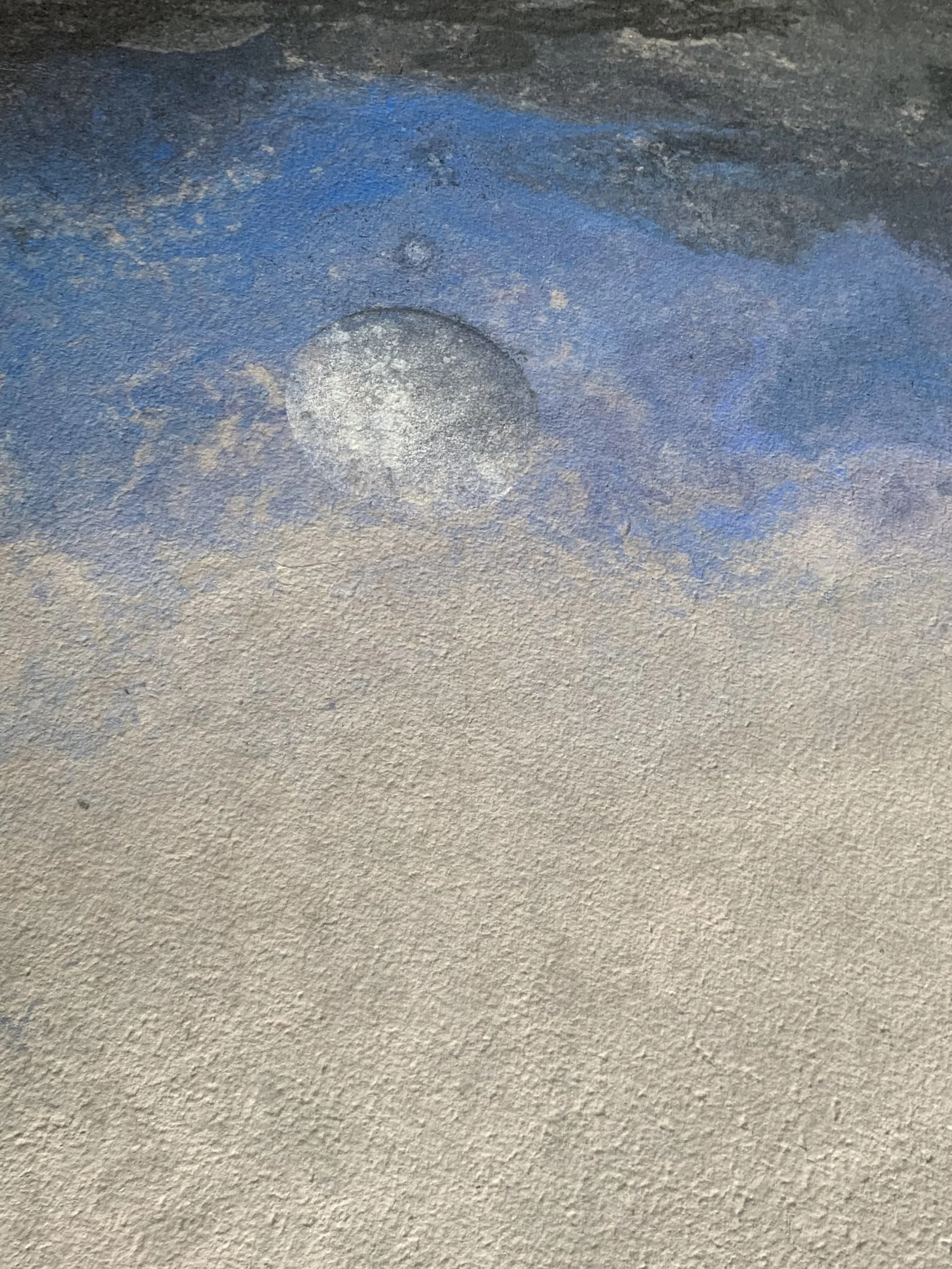
Beginning with the beginning, the class will cover techniques for beating fiber to create base sheets for both production and single sheet formation. Participants will be introduced to working with five different fibers—Belgian flax, cotton rag, bleached and natural abaca, blue denim and cotton linter. We will work from small sheet production to gradually making large sheets of 18 x24 inches. Using shapes and sizes of molds and deckles, very thin layers of fine paper pulp will be overlapped building color transitions possible when working with translucent overlays, shaped molds, stencils, and a variety of pulp painting techniques. This will offer participants a wide range of processes to work spontaneously with. From landscape to abstraction, from figure to ground, from idea to object, these methods enable possibilities for working without conscious intention—automatistically. Finally, creating sample books to record fiber combinations will be encouraged.
-
Tom Balbo has spent most of his life in and around Cleveland, Ohio. He graduated from Baldwin-Wallace College in Berea, Ohio with a B.A. in Studio Arts. Tom then went on to receive his Master's Degree from Syracuse University's College of Visual and Performing Arts in Syracuse, New York in 1980 in Studio Arts. Tom was awarded a Syracuse University Fellowship Grant in 1979 and a Ford Foundation Grant in 1980. Tom's earliest work was primarily in ceramics and printmaking. As his interest in papermaking grew, his work turned increasingly towards expressing his artistic creativity in this area. Over the past 40 years, Tom's work has been exhibited and shown in a large number of shows and galleries and he has garnered numerous awards and critical attention for his work. In 2008, along with other local artists, Tom founded The Morgan Art of Paper Conservatory and Educational Foundation in Cleveland, Ohio. Presently, Tom continues to work in paper, printmaking, and ceramics.
7
-
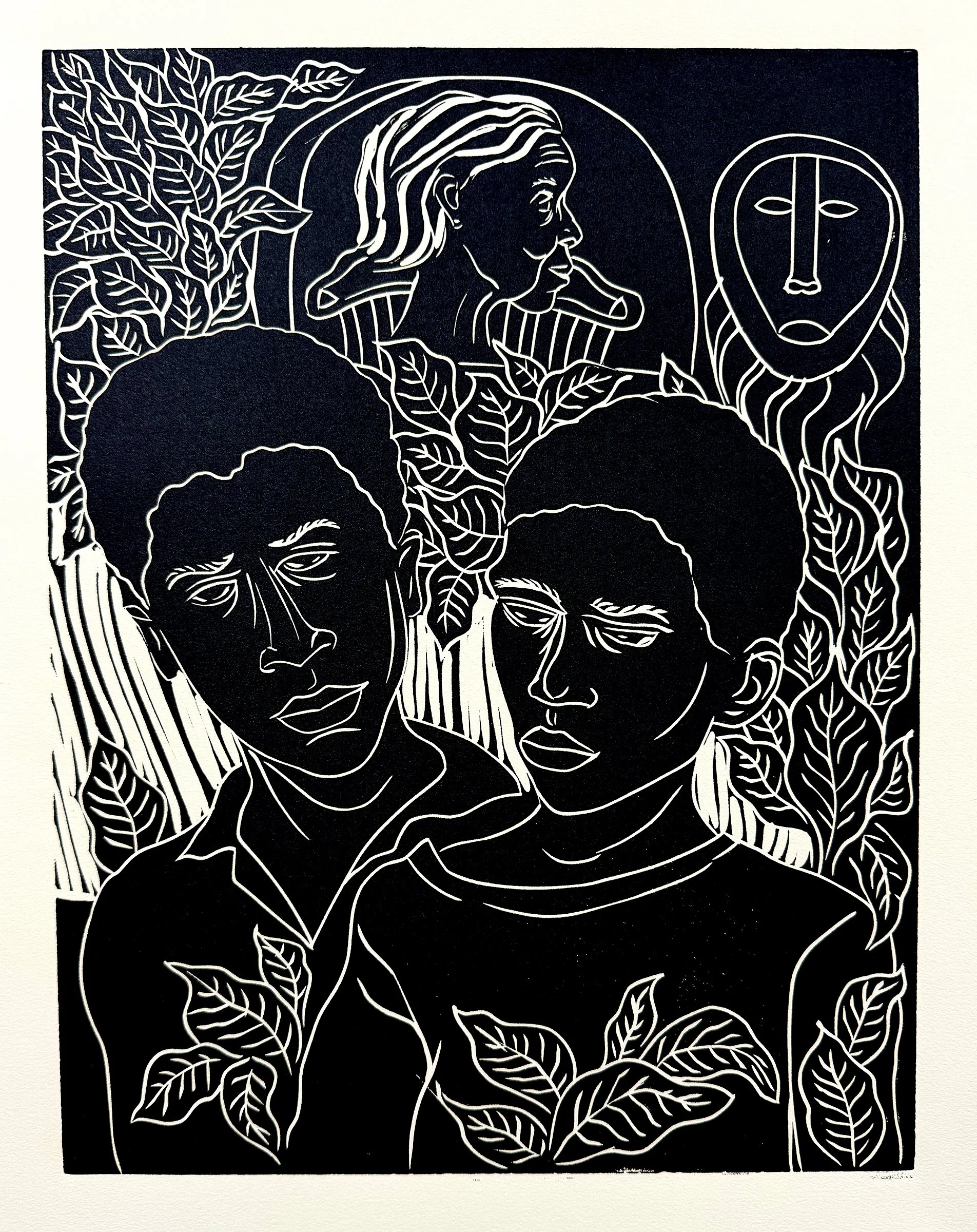
Relief printmaking is an extremely versatile medium used for centuries to produce prints. Blocks can be carved in multiple materials and printed on multiple surfaces. This class will cover the basic processes used in relief printmaking—from planning a design to carving linoleum blocks to printing images using an etching press. Students will be encouraged to experiment with more advanced techniques and to develop personal imagery. The class emphasizes rhythm and mark-making as a lens to use while composing images to produce visual interest in those images . Beginner and Intermediate students encouraged!
-
Jamaal Barber is a creative, imaginative soul born in Virginia and raised in North Carolina. In 2013, after seeing a screen-printing demo at a local art store, Jamaal started experimenting with printmaking, making it his primary focus. Jamaal creates woodcuts, screenprints and mixed media paintings. Since graduating with an MFA in printmaking from Georgia State University his work has turned to issues of family legacy, Black joy and abstract vision of Afrofuturism. His woodcuts and mixed-media prints illustrate the new Folio Society special edition of The Underground Railroad written by Colson Whitehead. Jamaal recently participated in the MTV/Smithsonian Channel art competition show The Exhibit. He has also worked for Twitter, the New York Times, Penguin Random House, Black Art in America, and Emory University.
8
-
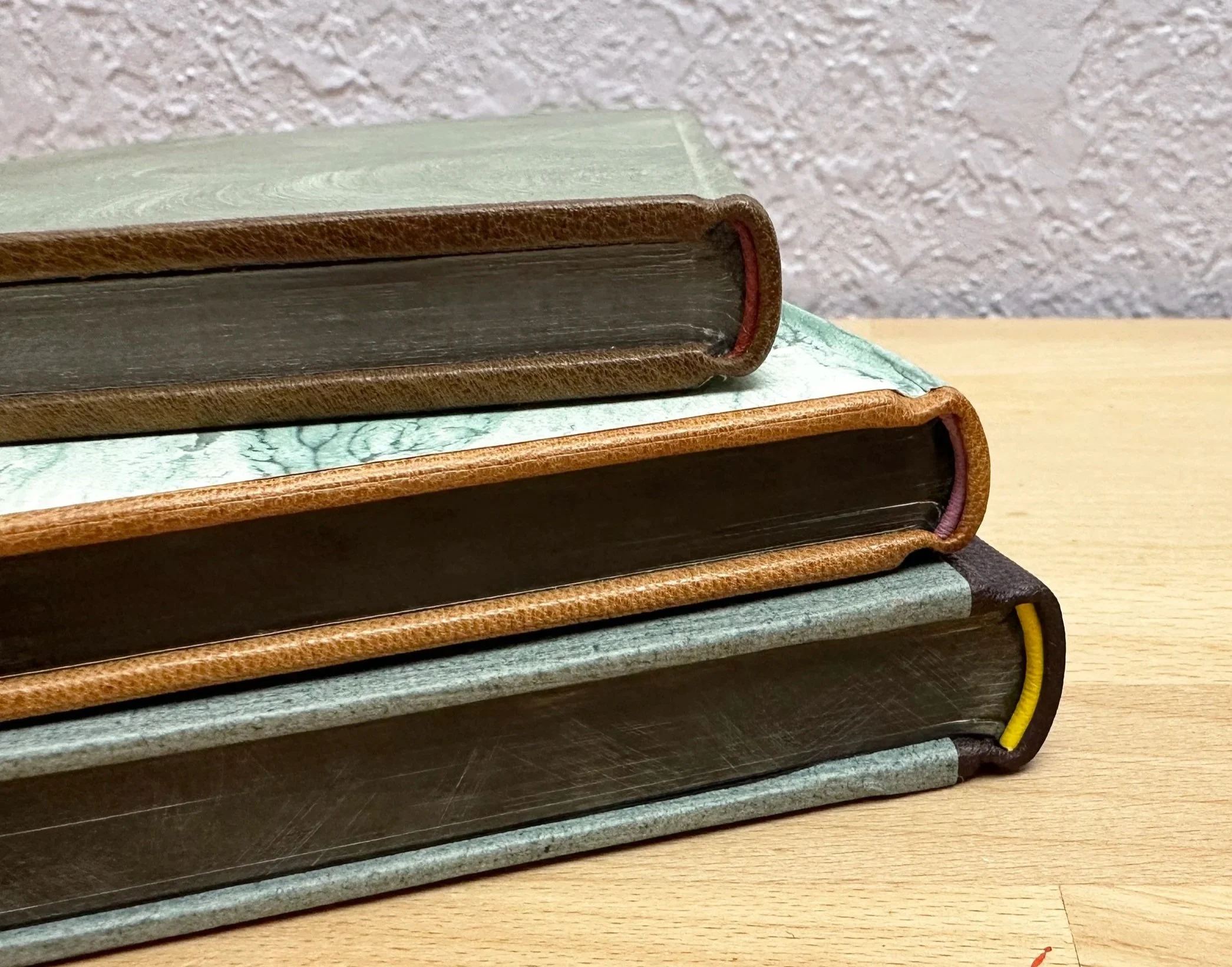
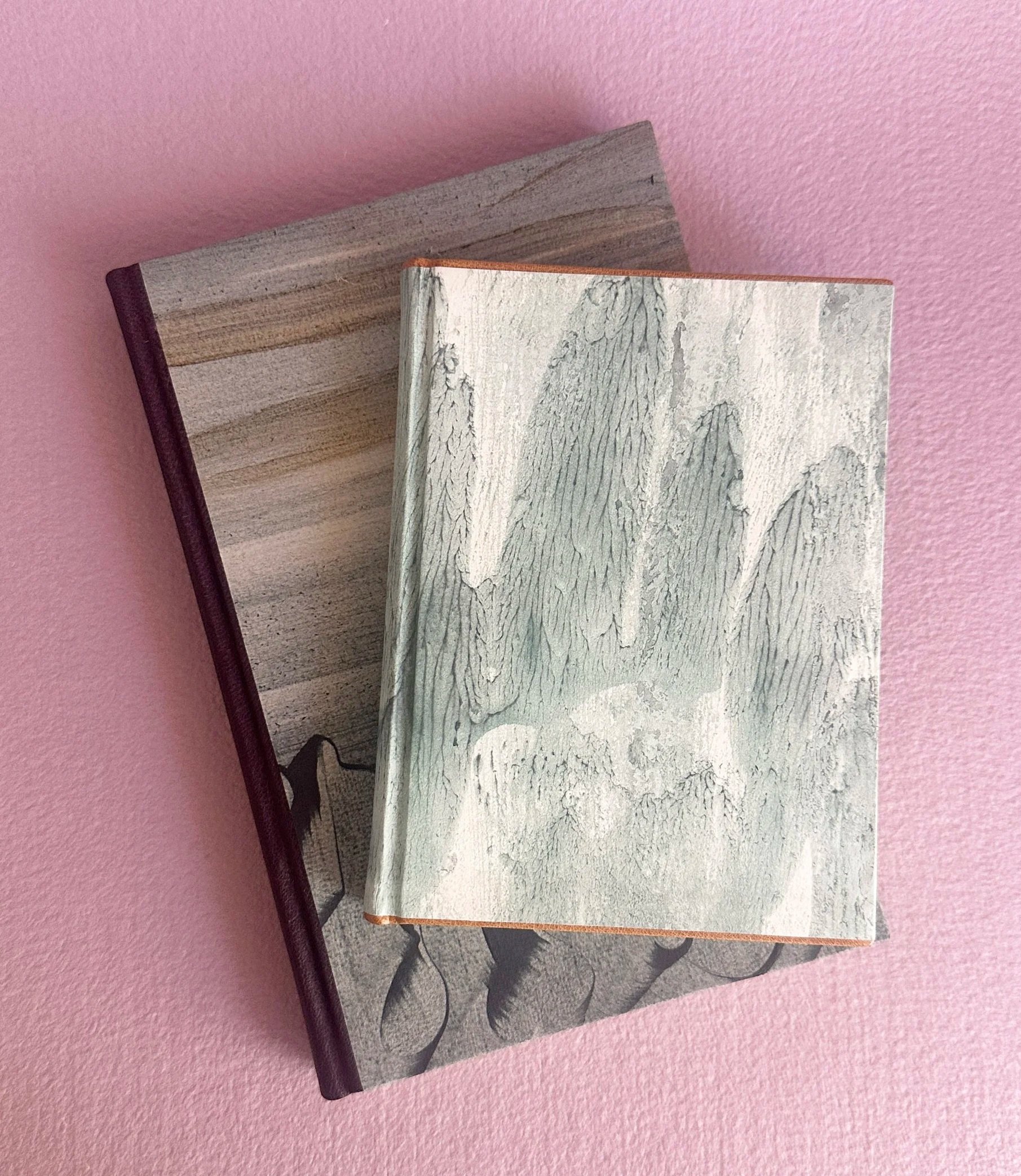
In the early 19th c., Danish Paper Bindings were developed in response to economic downturns affecting the demand for luxury items. Bookbinders turned to less expensive materials such as paper to create bindings that ‘mirrored’ those bound in leather. Over the next century, Danish Paper Bindings became an established tradition with adaptations devised by binders August Sandgren and Henrik Park. Park created the Millimeter and Rubow bindings—distinguishing features being a leather spine with just a millimeter or so creeping onto the boards and, in the case of the Rubow, a narrow piece of leather running the length of the head and tail edges, while retaining the paper spine. In this workshop, we’ll explore the two Danish Paper Bindings created by Park: Millimeter and Rubow.
Participants will forward the text blocks and add edge decoration with graphite and gouache plus create simple sewn endbands. Students will also pare their own leather before and after covering the binding to create a smooth edge underneath the decorative paper that will cover the rest of the binding. These variations of the Danish Paper Bindings are very quick to produce yet still offer an elegant solution for any binding project.
-
Erin Fletcher is the owner of Herringbone Bindery located in Austin, TX. Her studio offers bespoke bindings, enclosures, small editions and design bindings for various clients and institutions. Her design bindings are regularly exhibited throughout the US and abroad, and have been collected by The Grolier Club, Boston Athenaeum and UCLA along with several private collectors. She is most known for her embroidered leather bindings. She first discovered a love for bookbinding and printmaking while studying at at the the School of the Art Institute of Chicago she discovered a love for bookbinding and printmaking. This experience brought her to attend the Bookbinding Program at the North Bennet Street School in Boston where she graduated in 2012. She regularly teaches in-person workshops for venues such as North Bennet Street School, San Francisco Center for the Book, and Penland School of Craft, and online workshops for San Diego Book Arts, Canadian Bookbinders, and Book Artists Guild.
9
-
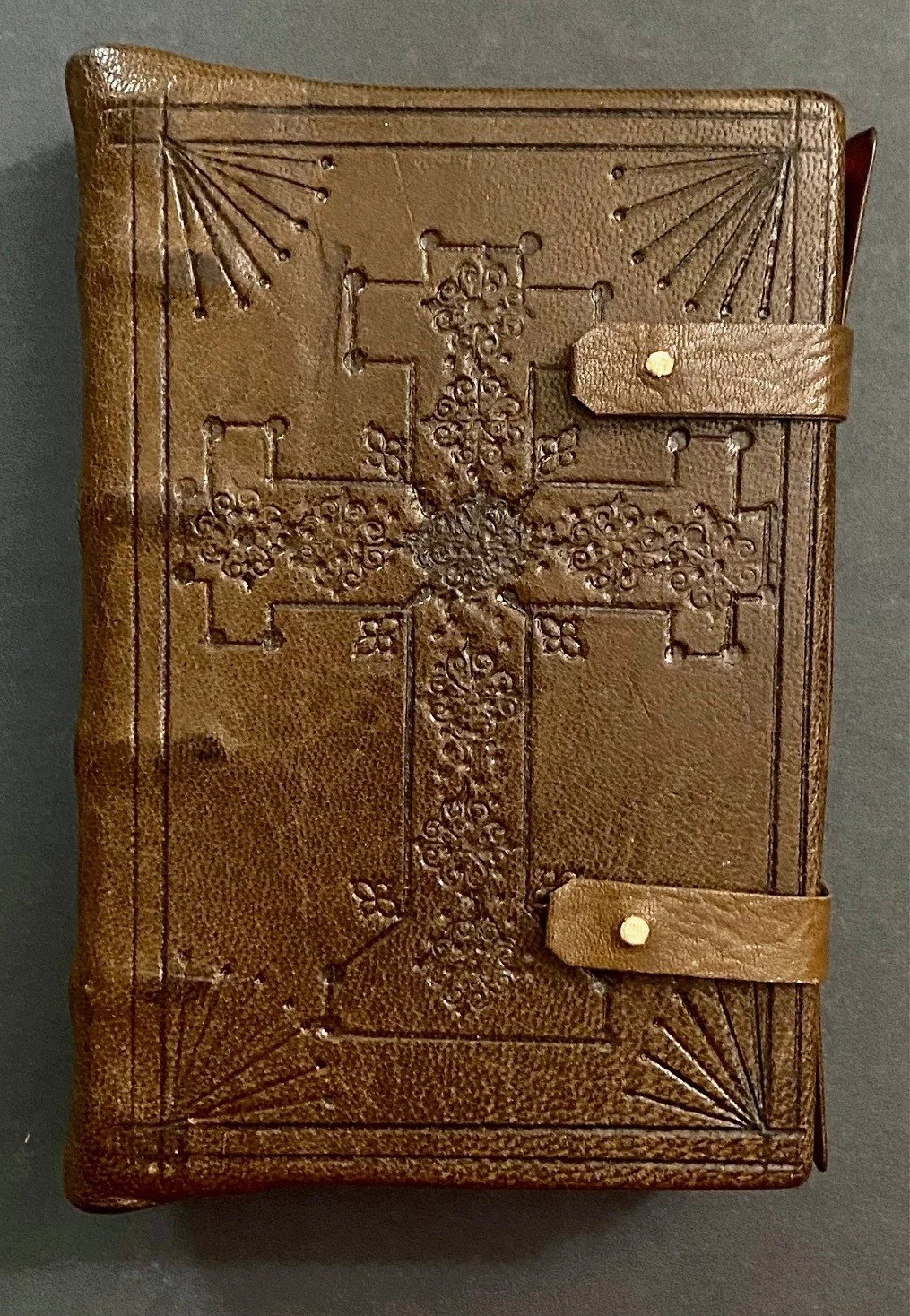
Complicated conservation treatments of damaged manuscripts and condition surveys of three major collections at the Library of Congress, Matenadaran, and St. Amenaprkich Monastery, have shaped Tamara Ohanyan’s knowledge and understanding of the techiques and materials involved in traditional Armenian monastic bindings.
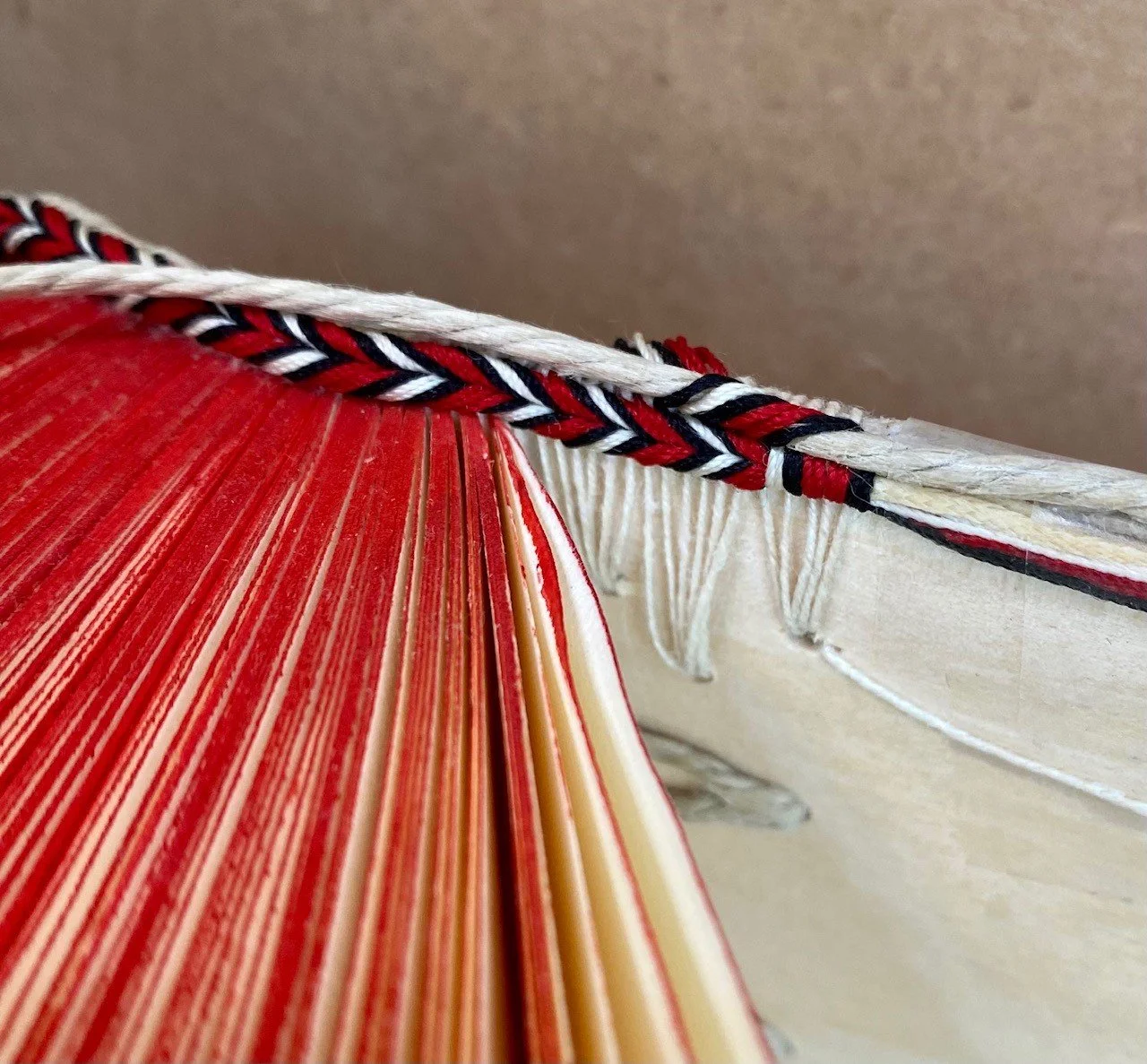
Armenian manuscript bindings are a millenium-old craft known for its distinct structure. The binding methods have remained consistent since the earliest surviving examples, as their association with monastic life ensured continuity. In this workshop, participants will learn the processes involved in making an Armenian traditional binding. In common with other binding styles of the Eastern Mediterranean, Armenian binding features include attached wooden boards, compound endbands, flat spines, and fastenings. However, the details vary significantly from Byzantine or Syriac bindings. Focusing on a specific Armenian binding structure, this workshop will offer an opportunity for students to share in Tamara's vast experience with Armenian bookbinding and manuscripts, and to gain a deeper understanding of these unique structures through crafting their own model.
-
Tamara Ohanyan is a Senior Book Conservator at the Library of Congress in Washington, DC. She received her degree in Art from State University, Yerevan, Armenia in 1991. From 1992-2000 she worked as a senior book conservator at the Matenadaran, Research Institute of Ancient Manuscripts in Yerevan, Armenia. She received her certificate of advanced internship in book conservation from the Library of Congress (LC) in 2001. For the past 24 years she has worked on rare materials from LC’s collections to support the digitization program. She has provided training on digitization and conservation treatment at several national and international cultural institutions. Her research interest is in Armenian book production, both in manuscripts and print form, and in the conservation of Islamicate manuscripts. She has several publications in this area.
10
-
You’ve made a beautiful book; you spent hours toiling over your design and have finally finished a work that is ready to enter the world. You were a genius to embed eyeballs into the cover—conceptually perfect—and you can't wait for viewers to experience the book through the sunglasses that that accompany it. But how will you keep the delicate work and its accessory protected? How do you make sure the eyeballs don't get scratched? And what do you do with the sunglasses? Hand them over in a plastic bag?
Enter the ‘Book Arts Toolbox’. Box making is a necessary skill for a book artists. Boxes are often a requirement for selling work to institutional collectors. On top of protecting their contents, you also want your projects professionally presented. Having the ability to accommodate a large variety of forms helps ensure that you'll be able to protect and present any future project.
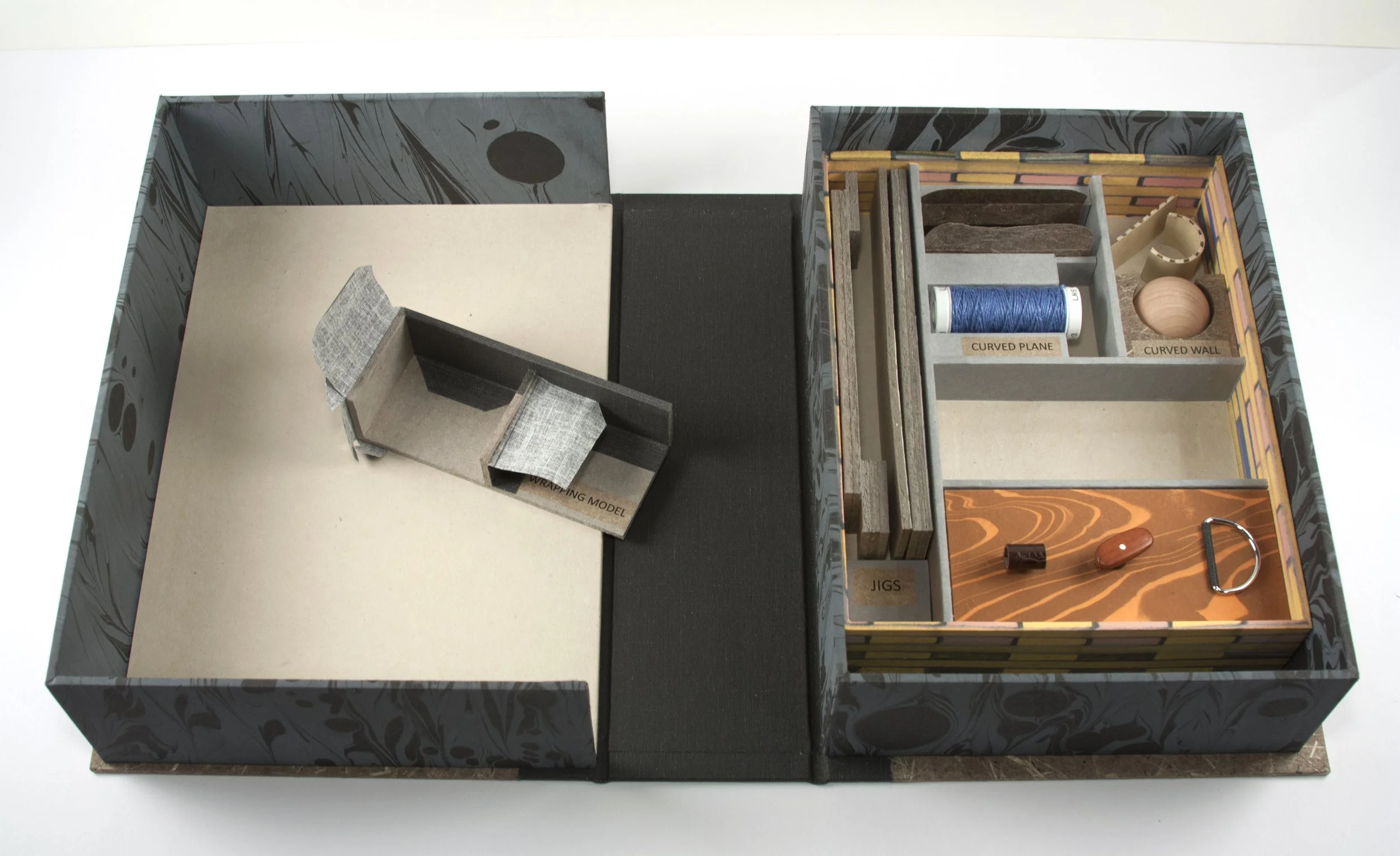
Given the variety of shapes and sizes binding tools have, in this class we will use our tools themselves as the inspiration for building a complex box structure. We will discuss how to plan such a project, considering each box element from board to covering material. Throughout our time together, we will work through a range of techniques like recessed surfaces, compartments, drawers and divided spaces that will accommodate traditional and unique shapes presented by our tools. Students are invited to expand upon the basic project as their interest and skill set allows. No previous experience is necessary!
-
Mary Uthuppuru is a box maker and book artist based in Bloomington, Indiana. She began her career in books while earning a master’s degree in library science with a specialization in Rare Books at Indiana University, where she studied book history and participated in workshops across the country. She later honed her skills in book repair and box making as a Conservation Technician, developing an in-depth understanding of book structures and their repair under the direction of the head of conservation at the Lilly Library. Under the name Spring Leaf Press, Mary Uthuppuru entered private practice as a full-time book artist. Her favorite work invites a deeper exploration of the natural world through artist books, relief prints, and box making, often in collaboration with others. Her work is collected nationally and internationally. Mary now owns and operates Colophon Book Arts Supply, bringing her experience and care to another role in the book community.